1 Corinthians 15 · NKJV
1 Corinthians 15: The Creed Older Than the New Testament
0:56 Short
What does 1 Corinthians 15 say?
Most people assume the earliest account of the resurrection is in the Gospels. It isn't. It's four verses Paul quotes in 1 Corinthians 15 — and he says plainly that he's passing on something he received from someone else.
"For I delivered to you first of all that which I also received: that Christ died for our sins according to the Scriptures, and that He was buried, and that He rose again the third day according to the Scriptures, and that He was seen by Cephas, then by the twelve. After that He was seen by over five hundred brethren at once, of whom the greater part remain to the present, but some have fallen asleep." (1 Corinthians 15:3-6, NKJV)
Scholars across the spectrum treat this as a pre-Pauline creed — a formula Paul inherited rather than composed. Gary Habermas and Michael Licona, who built the "minimal facts" approach around it, date Paul's receiving of it to within a few years of the crucifixion, most likely from Peter and James in Jerusalem. That's not a legend that had decades to grow. That's a summary circulating while the named witnesses were still alive and reachable.
You can disagree about what the witnesses saw. That's a real conversation. But the timeline objection — "this all developed generations later" — is the one thing this passage takes off the table.
Full episode: https://youtu.be/SG5W2DtZZ9M
Bible references
Scripture in this video is quoted from the NKJV.
Transcript (show)
The earliest piece of evidence for the resurrection is not the gospels. It is a short creed embedded in 1 Corinthians 15. Paul wrote 1 Corinthians around AD55. But look at what he says. For I deliver to you first of all that which I also received, that Christ died for our sins according to the scriptures, and that he was buried, and that he rose again the third day according to the scriptures, and that he was seen by Cphus, then by the 12.
After that, he was seen by over 500 brethren at once, of whom the greater part remained to the present, but some have fallen asleep. After that he was seen by James then by all the apostles. That word delivered and received is rabbitic language for handing on a fixed tradition.
Transcript from the video's captions on YouTube.
Related videos
 Video
17:20
Video
17:20
1 Corinthians 15:14 · NKJV
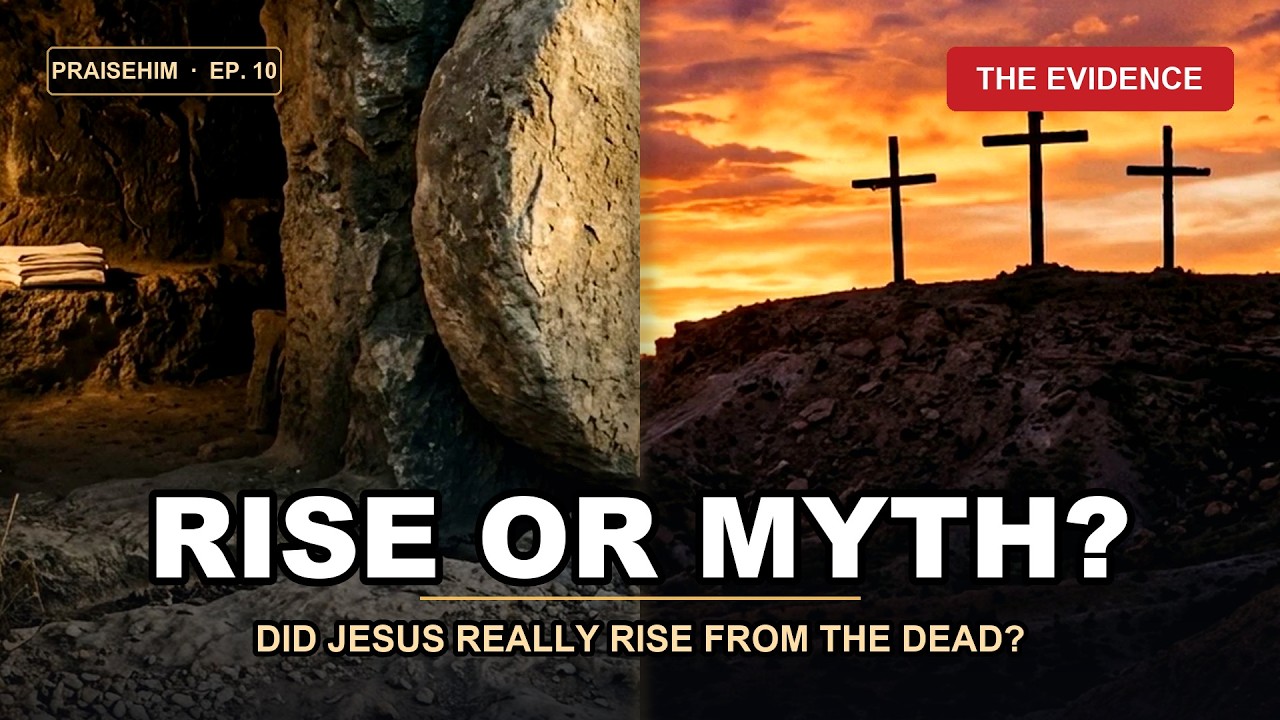
Did Jesus Really Rise From the Dead? The Evidence.
Did Jesus really rise from the dead — or is it a legend the church built centuries later? In this episode of Life's Hardest Questions, we wa...
 Short
0:59
Short
0:59
 Short
0:44
Short
0:44
 Short
0:37
Short
0:37
 Short
0:56
Short
0:56
 Short
1:00
Short
1:00